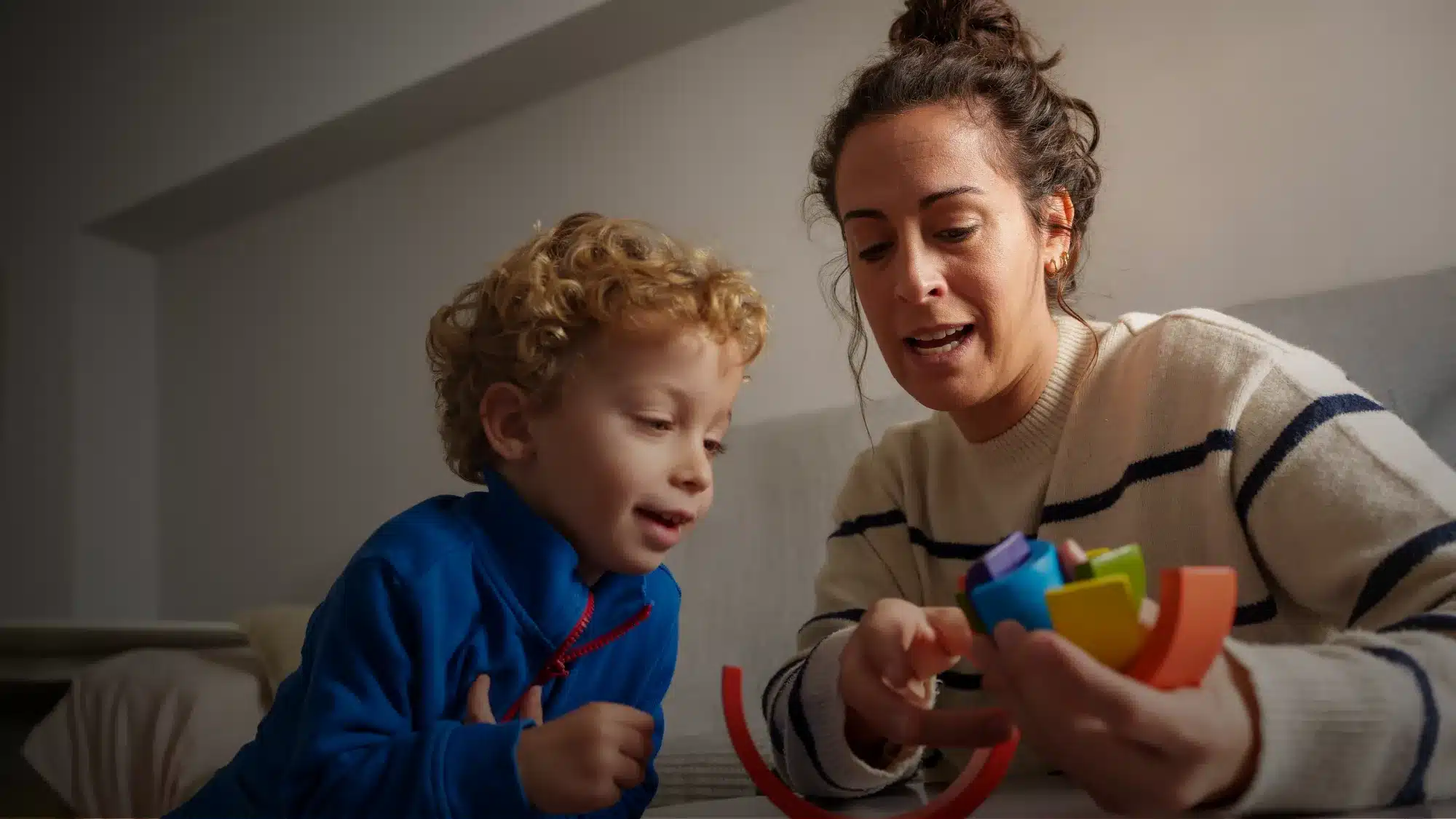
Playtime, shared meals, and small household tasks can offer children opportunities to communicate, make choices, and practice everyday skills. These moments should also remain enjoyable, without every family activity becoming a formal lesson.
At All Together ABA, our ABA services in Danbury, CT include individualized support using Natural Environment Teaching (NET), which incorporates learning into familiar surroundings.
Follow Your Child’s Interests During Play
A favorite toy, song, or game can provide a natural starting point for practicing communication and participation.
Depending on a child’s preferences, families might:
- Take turns adding pieces to a building project
- Offer choices during drawing or crafts
- Practice requesting help with a puzzle
- Share a picture book and discuss favorite characters
- Play movement games with opportunities to pause or continue
Communication may involve speech, gestures, pictures, or an augmentative communication device. Honor requests for breaks and avoid requiring eye contact or unwanted physical contact.
Our ABA therapy overview describes individualized communication and daily living goals.
Use Household Routines for Practical Skills
Helping prepare a snack can create opportunities to choose ingredients, follow familiar steps, and request assistance. Sorting laundry or putting away toys might support organization and independent participation.
Choose activities that are safe, age-appropriate, and meaningful to your child. The aim is to build useful skills at a comfortable pace, not demand that every task be completed without support.
Our natural environment teaching article explains how skills practiced in everyday settings can become relevant beyond therapy sessions.
Create Flexible Structure Without Pressure
Some children benefit from predictable activity times, while others prefer more flexible plans. You can offer a simple visual schedule or give advance notice before changing activities.
Try these steps:
- Ask which activity your child wants to try.
- Explain or show the next step in an accessible format.
- Offer assistance when requested or welcomed.
- Notice communication, effort, and preferences.
- Allow breaks or changes of plan.
- Share observations with your child’s therapy team.
Use encouragement that the child finds meaningful. Avoid withholding essential items, comfort, or communication access as a reward.
If a planned activity becomes frustrating, consider shortening it or choosing something different. A child’s willingness to communicate discomfort is valuable information for adjusting future activities.
Collaborate with ABA Professionals
Your child’s clinician can help connect play activities with individualized goals and suggest ways to adjust support as interests develop.
Our parent training guide offers examples of practical home strategies. Our family collaboration guide explains why caregiver feedback matters when reviewing treatment plans.
You do not need to create an intensive home schedule independently. Discuss what feels realistic for your family.
Ask your therapist which activities are most relevant to current goals and how to recognize progress. Sharing what your child enjoys can help make recommendations more individualized.
Frequently Asked Questions
What age group benefits most from ABA services?
ABA can support people at different ages. Suitability depends on individual goals, preferences, needs, and the quality of support.
How often should ABA sessions be conducted?
Frequency varies by assessment, treatment goals, family circumstances, and clinical recommendations. There is no single schedule for every child.
Can parents participate in ABA sessions?
Yes. All Together ABA offers caregiver training and collaboration so families can help shape relevant goals and home routines.
Are ABA services covered by insurance in Danbury CT?
Many plans offer ABA benefits, but coverage, authorization, and out-of-pocket costs vary. Confirm details with your insurer and the intake team.
Explore Family-Centered Learning Support
If you’re considering ABA services in Danbury, CT, we can discuss how play and family activities may fit your child’s individual plan. Contact All Together ABA or call (203) 200-0546 to ask about services and insurance verification.